Dropshipping vs. Print on Demand: Which is Profitable?
Starting an online business in 2025 is easier than ever. Many entrepreneurs compare dropshipping vs. print-on-demand before they begin. Both models are low-risk. Both models avoid upfront inventory costs. Both allow you to sell online without managing warehouses or shipping. That makes them attractive for beginners. However, the two models are not identical. Dropshipping relies on selling products directly from suppliers. Print on demand creates custom items only after a customer orders. One focuses on speed and variety. The other focuses on branding and personalization. Each has its own advantages. Each has its own limits.
The real question is profit. Which model brings more money in 2025? Is dropshipping vs. print on demand the better choice for you? This guide explores how both work, where they earn, and what challenges you’ll face. By the end, you’ll know which model fits your goals and how to maximize your margins.
What is Dropshipping?
Dropshipping is one of the easiest ways to start an online store. You don’t need to buy products in advance. You don’t need to manage a warehouse. You don’t need to handle packaging or delivery. Instead, your supplier does all the heavy lifting. This makes it a simple and low-cost business model in 2025.
The process is straightforward. You list products from a supplier on your store. A customer places an order and pays you. You forward the details to the supplier. You pay the supplier the wholesale price. The supplier ships the item to your customer. You keep the difference as profit.
This means you can sell almost anything. Electronics, fashion, home goods, fitness gear, pet products,the catalog is endless. You can test new products quickly and drop slow sellers without risk. You can follow market trends and catch viral products while demand is high. For many entrepreneurs, this flexibility is what makes dropshipping attractive.
How it works step by step:
- You set up an online store (Shopify, WooCommerce, Amazon, TikTok Shop, etc.).
- You add products from a dropshipping supplier’s catalog.
- A customer places an order and pays you the retail price.
- You forward the order to the supplier and pay the wholesale price.
- The supplier ships the product directly to the customer.
- Your profit is the difference between what the customer paid and what you paid the supplier.
Dropshipping is not a perfect system. It offers freedom and flexibility, but it also comes with risks. You can launch fast with little investment. You can test hundreds of products without buying stock. You can scale quickly if a product takes off. But you also need to manage supplier reliability, delivery times, and customer expectations.
In 2025, dropshipping still works. Many sellers profit every day using this model. But success is not automatic. It depends on smart product research, strong supplier partnerships, and effective marketing. If you can handle those challenges, dropshipping can be a powerful way to build an online business.
What is Print on Demand?
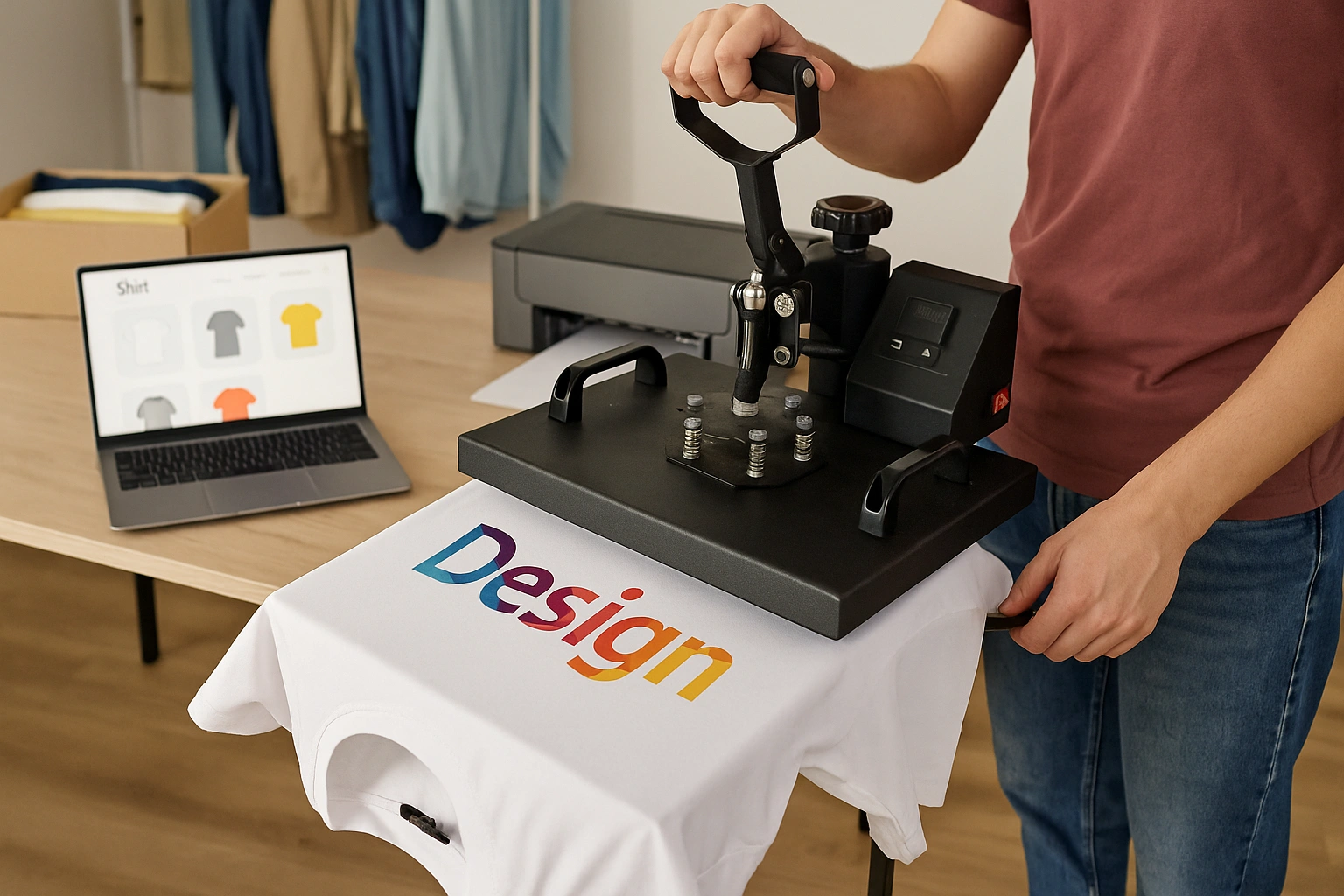
Print on demand, or POD, is a branch of dropshipping with a creative twist. Instead of selling ready-made products, items are produced only after a customer places an order. There’s no need to hold inventory, manage printing, or worry about shipping. A POD supplier handles the entire process, from production to delivery.
This model is especially appealing for sellers who want to focus on creativity and branding. With POD, designs can be applied to t-shirts, hoodies, mugs, posters, and phone cases. Each product becomes unique because it carries your own artwork, slogan, or logo. As a result, entrepreneurs can build collections that reflect a clear style and attract loyal buyers.
How it works step by step:
- Choose a POD supplier (Printify, Printful, Gelato, etc.).
- Upload your designs and place them on products in the catalog.
- A customer purchases from your store at the retail price.
- The POD supplier prints the design on the blank product.
- The supplier ships it directly to the customer.
- You keep the profit margin between your retail price and the supplier’s cost.
Unlike traditional dropshipping, POD thrives in niche markets. Fans of hobbies, pets, and lifestyle communities are often willing to pay more for personalized items. In addition, customized gifts perform well because buyers want products that feel personal and meaningful.
Nevertheless, there are trade-offs. Profit margins are often slimmer compared to dropshipping generic products. Production takes extra time because each item is printed after purchase. Consequently, shipping may be slower and customer wait times longer. If your designs fail to connect with your audience, sales can stall quickly.
Dropshipping vs. Print on Demand: Overview
| Feature | Dropshipping | Print on Demand |
|---|---|---|
| Difficulty Level | Moderate, requires product testing and supplier management | Low to moderate, design and branding are key |
| Inventory | None, supplier stocks items | None, products are printed when ordered |
| Costs | No upfront stock cost, ad spend is the main expense | No upfront stock cost, design, and printing fees per order |
| Customization | Very limited unless private label | High, you control product designs |
| Product Range | Huge, electronics, home goods, beauty, gadgets | Limited to print-ready items, apparel, mugs, posters, and accessories |
| Quality Control | Variable, depends on the supplier | Consistent with a trusted POD partner |
| Branding Options | Limited, few suppliers offer custom packaging | Strong branding possible, labels, packaging, inserts |
| Flexibility | Easy to add new products quickly | Easy to add new designs, slower to expand categories |
| Competition | High, many stores sell the same items | Lower designs are unique |
| Shipping Time | Can be fast with local suppliers, often slow with overseas suppliers | Slightly longer due to printing, predictable timelines |
| Profit Margins | 15% to 40% depending on the niche | 20% to 50% depending on product type and branding |
| Integrations | Shopify, Amazon, TikTok Shop, eBay, and more | Shopify, Etsy, WooCommerce, Amazon, and more |
This overview shows that while both models are low-risk and beginner-friendly, they serve different business goals.
Profitability Analysis in 2025
When comparing dropshipping vs. print on demand, profitability is often the deciding factor. Both models allow you to start without inventory and with low upfront costs. Both rely heavily on marketing, traffic, and customer trust. However, the way each business makes money and keeps money looks very different. In 2025, margins are shaped not just by product costs, but also by ad spend, customer acquisition costs, and how well you retain buyers. Understanding the math behind each model is essential before you commit. Let’s break down the numbers and see where the money really comes from.
Dropshipping margins
| Item | Cost | Selling Price | Profit |
|---|---|---|---|
| Phone Case | $5 (supplier) | $15 | $10 |
| Kitchen Gadget | $12 (supplier) | $30 | $18 |
| Fitness Tracker | $25 (supplier) | $60 | $35 |
Dropshipping works well when you can move products quickly and at volume. Even small per-order profits add up when a winning product goes viral. The biggest factor is ad efficiency: lower customer acquisition costs mean higher margins.
Print on demand margins
| Item | Cost | Selling Price | Profit |
|---|---|---|---|
| T-Shirt | $14 (blank + print) | $30 | $16 |
| Mug | $6 (blank + print) | $15 | $9 |
| Hoodie | $22 (blank + print) | $45 | $23 |
Print on demand often earns less per item, but it shines in niches where customers value uniqueness and branding. If buyers love your designs, they are more likely to return, and repeat customers boost long-term profitability.
Dropshipping can yield higher per-order profits, especially if you discover trending products and scale them fast with paid ads. Print on demand, by contrast, often wins in long-term repeat sales, because branded designs encourage loyalty and word-of-mouth. Both models can be profitable in 2025, but the winner depends on whether you want quick gains or steady brand growth.
Advantages of Dropshipping

Dropshipping remains one of the most attractive eCommerce models in 2025. It continues to appeal because of its low risk, easy setup, and ability to adapt quickly. Entrepreneurs can launch stores with minimal upfront investment, test different niches, and identify winners without stocking inventory. This speed and flexibility make dropshipping a popular choice for both beginners and experienced sellers. Unlike traditional retail, you don’t have to guess demand or tie up money in unsold stock. Instead, you focus on finding products that sell and scaling them as fast as possible.
- Huge product variety: You can sell almost anything, from home gadgets to pet supplies to electronics.
- Faster to test winners: Products can be swapped in and out of your store with very little risk.
- Scalable: A winning product can be scaled with ads, bringing in fast growth.
- High-ticket potential: Selling expensive items often means bigger profits per sale.
Dropshipping is not only about low risk but also about speed. Few business models let you test ideas and products as quickly. You can pivot from one niche to another without heavy losses, which is vital in fast-moving markets. The wide variety of products, combined with the ability to scale quickly, creates real profit opportunities. While dropshipping has challenges, its flexibility and earning potential continue to make it one of the strongest eCommerce models in 2025.
Advantages of Print on Demand
Print on demand gives sellers a chance to compete in ways that go beyond price. Instead of relying on generic products, you create items that reflect personal creativity and customer identity. Every design you launch can set your brand apart from thousands of lookalike stores. This is a major advantage in 2025, when shoppers expect originality and value products that feel personal. POD also removes the risks of overstock and wasted inventory, because each order is produced only when a customer buys. That makes it flexible, scalable, and safe for beginners who want to focus on design and marketing rather than logistics.
- Unique products: You own the designs, so competitors can’t copy your exact items.
- Stronger branding: Custom packaging, labels, and inserts make it easier to build a recognizable brand.
- Repeat buyers: Fans of your designs or niche are more likely to come back.
- Lower competition: Because your designs are unique, you avoid the race-to-the-bottom pricing common in dropshipping.
Print on demand is more than a business model; it’s a way to build a lasting identity online. Shoppers who connect with your style often become repeat buyers, creating steady long-term revenue. Strong branding also increases trust and makes it easier to charge premium prices. While growth may be slower than dropshipping at first, the ability to create one-of-a-kind products pays off over time. In 2025, POD remains one of the best models for entrepreneurs who want to blend creativity with commerce and build a brand that customers remember.
Challenges of Each Model
Both dropshipping and print-on-demand are attractive because they lower startup risk, but neither model is perfect. Each comes with obstacles that sellers must manage carefully. Knowing these challenges upfront can help you avoid common mistakes and set realistic expectations.
Print on Demand Challenges
Print on demand is creative and flexible, but it’s not without drawbacks. Margins are slimmer compared to high-ticket dropshipping, and fulfillment takes longer since each product is printed after purchase. Success also depends heavily on design quality; weak or generic designs rarely sell.
| Print on Demand Challenges |
|---|
| Lower margins per item compared to high-ticket dropshipping |
| Longer fulfillment times since products are printed after purchase |
| Heavy reliance on strong, appealing designs; weak ones won’t sell |
Dropshipping Challenges
Dropshipping makes it easy to sell a wide variety of products, but it comes with risks. Competition is high in almost every niche, and supplier reliability can be inconsistent. Poor quality or long shipping times often lead to refunds, disputes, and lost profits.
| Dropshipping Challenges |
|---|
| High competition in almost every niche |
| Unpredictable suppliers affect product quality and shipping times |
| Refund and dispute risks from poor customer experiences |
Challenges exist in both models, but they are manageable with the right approach. Print on demand requires creativity and patience, while dropshipping requires fast testing and strong supplier management. Neither model guarantees easy profits. However, sellers who prepare for these risks can reduce problems and build sustainable businesses in 2025.
Which is More Profitable in 2025?
Dropshipping delivers fast profits for sellers who can test products quickly and scale ads aggressively. It works best for entrepreneurs who enjoy chasing trends and moving fast in competitive markets. However, the gains often fade as competition rises.
Print on demand, on the other hand, builds long-term stability. Unique designs, strong branding, and loyal repeat buyers make it easier to sustain growth year after year. While the profit per order may be smaller, the value of customer loyalty and a recognizable brand can outweigh quick wins.
Dropshipping is often more profitable per order, but print-on-demand is more sustainable for long-term success in 2025. The right choice depends on your skills, goals, and business style. If you want to know more about Cryptocurrency, then visit this article. It covers how digital coins work, why they matter, and where to start. Get clear answers in our full cryptocurrency guide.
FAQs: Dropshipping vs. Print on Demand
Is print-on-demand considered dropshipping?
Yes, print-on-demand is technically a form of dropshipping, but with the added twist of custom product creation.
Which has higher margins?
Dropshipping often has higher absolute profit per order, while print-on-demand can achieve higher margins with branding and upselling.
Which is better for beginners?
Print on demand is easier for beginners who enjoy design and branding. Dropshipping requires stronger skills in product research and ad testing.
Do I need a lot of money to start?
Both can be started with a few hundred dollars, but scaling requires ad budgets. Print on demand may need investment in sample products for quality assurance.
Can you combine both?
Yes. Many stores run hybrid models, selling trending dropshipping products alongside branded print-on-demand designs.