How Gen Z Is Changing the Real Estate Market
Gen Z Changing Real Estate with bold, unexpected methods. Born between 1997 and 2012, this technology-loving generation is redefining how the housing market works. With a cautious approach to digital flow, strong social values, and finance, general jade buyers are changing how homes are bought, sold, and marketed. This generation is not only entering the housing market – they are completely shaped again. Unlike the previous generations, General Z does not chase tradition.
They give importance to speed, transparency, and purpose over reputation or square footage. There are no real estate apps, virtual tours, and remote closings – they are not expecting. Luxury matters more than ability and stability. Their home should support distance, personal development, and even side careers. They get housing inspiration from TikTok and Instagram, not only from real estate agents. To succeed in this developed scenario, the professionals of the industry must adapt to how Gen Z is Changing Real Estate, or the risk is being left behind.
1. Digital-First Home Buying: How Gen Z Starts the Search
For Gen Z, the homebuying trip does not start in an open house – it starts online. This generation grew up with quick access to everything, including smartphones, high-speed internet, and real estate. As digital natives, they expect technology to streamline every step of the purchase process. Scrolling through the listing during lunch break, watching tickets about fixer-openers, or texting an agent at midnight is normal. They rely on platforms such as Zillow and Redfin rather than traditional methods. What matters most matters rapid access to transparency and information. Long phone calls and old listings? They are deal-breakers. Gen Z is quick to swipe away from anything that feels clunky, slow, or offline. To win your attention, real estate must be available on mobile-first, video-rich, and their fingers-intermittently. If your real estate brand does not meet their digital expectations, it is probably not on their shortlist.
What Gen Z Expects When House Hunting:
- Quick access to listings through apps such as Zillow and Redfin
- High Quality Video Tour and Emarsiv 3D Walkthrough
- Easy communication through text, chat, or DM – not phone calls
- E-H-Skshak, remote closed, and fully digital paperwork
This is not a trend – this is a total change in buyer behavior. Gen Z does not see the digital tool as extra; They see it as necessary. Agents who are adapted to this digital mindset will find themselves beyond the curve. Those who will not fade out of relevance. This is not only about having a website – it is about the right tool, visual, and communication channel. Real estate professionals should invest in mobile optimization, virtual tour tech, and a messaging system.
2. Affordable Homes and Alternative Ownership Models
The strength of Gen Z is king. This generation grew up during the great recession and graduated into the world of high fares, student loans, and unstable job markets. Therefore, when it comes to the homeowner, they do not dream of a mansion – they want smart, durable, and inexpensive options. Attractive zip codes and name-brand condos do not affect them. Instead, they are ready to stay away from the center of the city or consider fixer-uppers to make it possible for own. Many people also detect creative paths such as co-living space, rent-to-own model, or differential investment. They think like financial strategists, not just like buyers. Their goal? Make long-term money while remaining flexible. General Z is showing the world that the owner of the property is not about the situation – it is about stability, freedom, and a smart scheme.
What Makes Affordability Appealing to Gen Z:
- Suburban and small-town houses provide low entry costs
- Rent-to-own and shared equity models reduce upfront expenses
- The co-living system aligns with their flexible lifestyle
- Crowdfunding, REIT, and partial ownership expansion of reach access
Gen Z is Changing Real Estate the definition of ownership. They no longer believe that you have to “settle” yourself, or even alone. They are using technology and alternative financing to bypass traditional obstacles. This is motivating developers to reconsider what affordable housing looks like – not only cheap, but smart. Financial education and transparency are important when selling to this audience. Agents and lenders should speak their language and provide real solutions, not cookie-cutter. And for vendors, it means that unconventional funding is open to buyers with sources. General Z proves that creativity can beat cash in today’s real estate game.
3. Green Living: Gen Z Demands Sustainable Real Estate
Stability is no longer optional – it is expected. As the most environmentally conscious generation ever, Gen Z places a high value on the environmental impact of its future homes. They actively look for assets that align with their climate concerns and moral lifestyle. Smart features, energy efficiency, and waste systems often matter more than granite countertops or large yards. Long traffic and neighborhood with walkability, bike path, and nearby public transit win over the car-dependent suburbs.
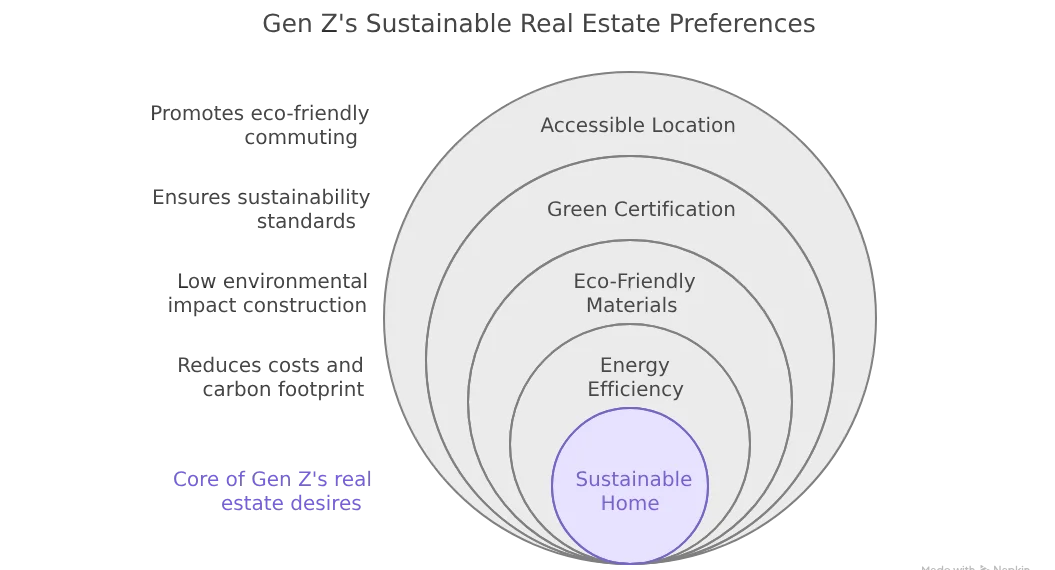
Even the materials used in construction are being investigated. They want homes that are future proofs-only stylish, but durable. And they do not shy away from rejecting the qualities that measure. For them, Green Living is general knowledge, not a luxury.
What Gen Z Looks for in a Sustainable Home:
- Solar panels, skilled equipment, and a smart energy system
- Environmentally friendly construction materials with low environmental impact
- Home in the neighborhood with public transport access
- Green Certification (eg, LEED) and Visible Sustainability Features
Choosing a house with green features is environmentally and financially affordable. Energy-skilled houses save money in the long term, reduce carbon footprints, and often qualify for encouragement or tax breaks. More importantly, they reflect the spirit of responsibility and conscious life. Developers designing with eco-awareness and transparency will stand out. Real estate agents who lead with stability in marketing will win the Trust of General Z, not later, but as a priority. Gen Z Changing Real Estate does not want vague claims; They want clear data and impact.
4. Connected, Walkable Communities Win Gen Z Buyers
Buying a house is not just about the building, what’s around it. General Z holds a high priority at the location, not in the context of reputation, but in the context of connections. They are ready for communities that feel alive: accessible roads, dog-friendly cafes, nearby schools, public parks, and access to basic services without the need to drive everywhere. The convenience, culture, and community vibes all affect their purchase decisions. Instead of spreading the suburbs, they look for places where daily life feels integrated – where work, work, exercise, and fun can be long without longer. They are more than values such as diversity and inclusion, which want neighborhoods that reflect a wide mixture of backgrounds and identities. It is not only about square footage – it is about feeling at home in a lively, connected environment.
What Gen Z Wants in a Community:
- Neighbors running with shops, parks, and public places
- Mixed-use developments
- Easy access to schools, healthcare,e and public transit
- A culturally diverse and socially inclusive environment
General Z is focusing on “Dream Lifestyle” from “Dream Homes”. They are not just buying property – they are investing in how they want to live day by day. A coffee shop, a local gym under the road, or a small walk to a lively weekend farmer market can mean more than an additional bedroom. Developers who prefer community design, green space, and mixed-use layouts will have a serious lead. And agents who highlight the facilities of the neighborhood will be better as home facilities, Gen Z will be interested. They want to feel vested, not isolated – and the location plays a big role. In this new era, the community sells the house
5. Remote Work Is Redefining Location Priorities
The 9-to-5 office is no longer anchor-and General Z knows it. Thanks to the distant work, they have the freedom to live where they want, not where they have to. This change is unlocking new real estate possibilities at stunning places. Once-ignored cities are now growing in the form of General Z Hotspots, which are chosen for strength, lifestyle, and culture. Places like Austin, Raleigh, and Salt Lake City are concluded, not because of the job hub, but because of the vibe and value. Even small towns and rural areas are attracting attention, especially with the expansion of high-speed internet. Now what matters is not how close to a house office, but how well it fits a flexible, purpose-driven life. General Z is showing the industry that the future of real estate is not tied to the corporate headquarters. It is associated with freedom.
What Gen Z Considers When Picking a Place to Live:
- Cities with distance-work infrastructure and lively culture
- Economic housing in small or medium-sized cities
- Advanced broadband and nature reach rural areas
This place is reversing the flexibility of the housing market. Traditional Real Estate Model preferred Commute Times – General Z prefers the quality of life. This means more demand in non-traditional cities and an increase in “Zoom Town” across the country. For real estate professionals, this is a very big opportunity – and a challenge. Success now depends on the marketing lifestyle on logistics. Showing fiber internet, home office space, and community features is more powerful than a downtown core. Developers should also consider designing for distance workers-with letters a lounge, a soundproof room, or tech-red-red-ray design.
6. Social Media: Gen Z’s New Real Estate Discovery Engine
Forget the advertisement or yard signals of the newspaper – General Z is searching for real estate on their phone. Platforms like TikTok, Instagram, and YouTube have become powerful search tools for this generation. Instead of fully relying on agents or listing, they scroll through short-form videos, home tours, renovation ideas, and even hostage tips from the affected. Social media offers them access to real-time advice, inspiration, and authenticity-traditional marketing often decreases. They are designed for homes that feel real, not excessive staging.

And the material that is the most resonant? Quick, visible, and reliable. Whether it is a viral bathroom makeover or a 15-second hostage myth-buster, the material shapes how Gen Z views the market. If you are not making their feed, then you are not even part of their decision process.
What Grabs Gen Z’s Attention Online:
- TikTok and Instagram reel tour
- Influencer advice on home buying, DIY, and financing
- Trendy design tips that spark inspiration and engagement
- Real estate agents who show with price-driven video content
Social media is no longer just a place to see – this is the place where trust is created and the deal begins. General Z does not wait for open houses; They want immediate access, visual story, and personality. The agents hugging video content and posts consistently have a serious lead. It is not about going viral – it is about being visible, useful, and authentic.
Even a small clip of a unique property facility or a buyer can create a quick tip for reliability when avoiding mistakes. Meanwhile, developers and brokers ignoring social media are only invisible to this generation.
7. Investing Young: How Gen Z Approaches Real Estate Wealth
The owner of the property is not a distant dream for General Z – this is a plan in progress. Unlike the previous generations, who were waiting to invest later in life, General Z is diving in a hurry, using creative and technical strategies. They do not believe in waiting for “all this together” before starting. Instead, they take advantage of side hustles, online tools,s and alternative financing to get their foot in the door.
It made it possible to invest in the property without purchasing the entire house, as the real estate platforms, such as Funtrise and Arrive. Many houses are also hacking – live in one unit, while renting the other to offset the mortgage. These methods allow them to generate income during the creation of equity. General Z views real estate not only as a roof over their head, but also as a main part of their wealth-making journey.
Creative Real Estate Strategies Gen Z Is Using:
- Micro-investing through real estate apps and crowdfunding platforms
- Renting out rooms or units to offset mortgage costs (house hacking)
- Using gig and freelance income to build savings for the down payment
- Prioritizing duplexes or income-generating properties over single-family homes
This generation is redefining the meaning of being a real estate investor. They do not need to be a zamindar in the traditional sense or own a huge portfolio to start. Small steps, such as partial ownership or renting a room, add up quickly.
General Jade gave importance to financial freedom, and real estate provides both passive income and long-term stability. What is more, they are educating themselves through social media, podcasts, and platforms that make investment more accessible than ever. For agents and developers, this change means understanding new buyer profiles and offering options
8. Gen Z Redefines the Meaning of “Home”
For Jean Z, a house is just over the walls and a roof – it is a reflection of who they are and how they live. They are not only the owners of a house; They want to shape it. Whether it is distant work, side hustles, creative hobbies, or wellness routine, their home should be compatible with every part of life. They value places that can be re-prepared – one day an office, next a studio, or even a rental opportunity.
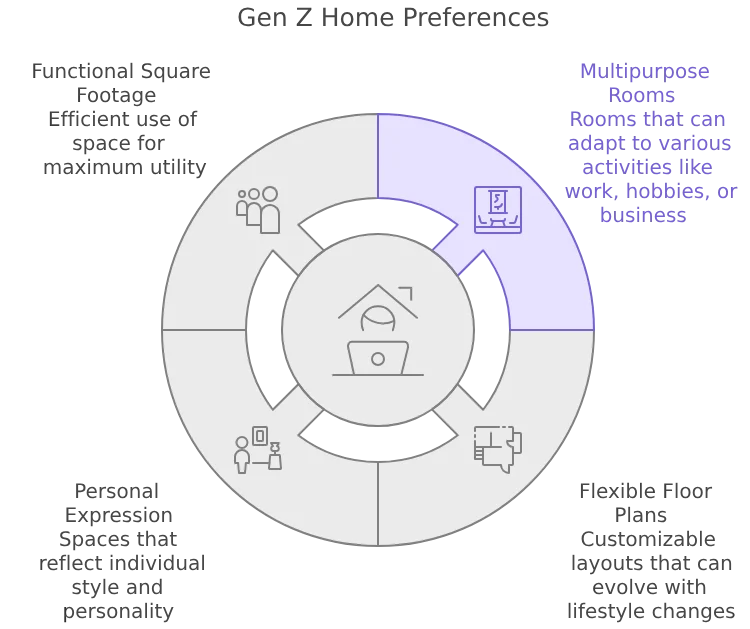
Traditional layouts and cookie-cutter floor plans do not stimulate them. What does it do? Flexibility, privatization, and capacity. They are more likely to consider a fixer-upper if it means they can make it their own. For General Z, the definition of “home” has developed – this is not the only place you live, but how you live.
What Gen Z Wants in Their Living Space:
- Multipurpose rooms that support work, business, or hobby
- Floor plans that may be developed with their lifestyle
- Option of optimized or renewing for personal expression
- East square footage functionality and flexibility
A mentality in Gen Z Real Estate is leading the innings: buying a house is not about fitting in a place – it’s about fitting that place for their life. They give importance to creative freedom, utility, and designing a location that meets their personal and business needs. This innings is affecting everything from the new build to how the fixer-uppers are marketed. Sellers and agents should highlight how a location can be used, not only what it contains.
9. Tech-Savvy Agents Are Gen Z’s First Choice
Today’s buyers do not want a sales pitch – they want a smooth digital experience. General Jade hopes that they will be technology-loving as real estate agents. This means that they are available on the platforms that they use, quickly responding and offering comfortable, mobile-first service. They are not going to wait for days for an email answer or make a call with the old PDF.
Scheduling should be as easy as booking online haircuts. The listing should be adapted to mobile, video tour, and pricing should be completed with a breakdown. General Z also pays attention to the social presence of an agent. If you are invisible online, you may not be present. In this new scenario, digital flow is not a good thing- it is a requirement.
What Makes an Agent Stand Out to Gen Z:
- Easy online scheduling and live chat or lesson-based communication
- CRM tools that automate updates, reminders, and transparent information
- Mobile-friendly listing with high-quality photos and videos
- Educational materials and video marketing on social platforms
Modern real estate experience is powered by speed, clarity, and convenience – and the General Z is not organized for low. Automation, video walkthrough, transparent pricing,g equipment, and real-time communication agents will naturally earn confidence. People sticking to old-school processes lose relevance rapidly. Good news? Adaptability does not mean attractive – it means to be efficient, responsible, and informative.
Whether through Instagram stories, calendly links, or automated follow-ups, help today’s technical equipment agents to be top-of-mind and accessible. General Z is not asking for bells and whistles – they are asking for simplicity, speed, and smart support. Meet them, and you will not only win their business, you will earn their L
Gen Z Is Changing Real Estate for the Long Term
The arrival of Gen Z in the housing market leads to a major change. His technology-with financial habits, financially smart and sustainable values, Gen Z Changing Real Estate from the ground. They are not only entering the market – they are writing it again. This generation has proved that the homeowner does not have to follow tradition. They are buying clever, living short, and thinking for a long time. Flexibility matters more than size. The community matters more than the situation. And digital feature is bare minimum, not bonuses.
Real estate professionals – from agents and developers to abusive and investors – need to be identified. Gen wants more than a Z listing and square footage. They want purpose-operated spaces, environment-conscious design, and a personal purchase experience. And they want all this to be on their timeline, their language, and on their screen. Takeaway? If you want to flourish in this new era, you need to think like General Z: Fast, flexible,e and future-centric.
Ready to take control of your financial future? Visit: Building Wealth Through Smart Strategies to discover how Gen Z is investing early, creatively, and confidently, and how you can start too.
(FAQs) About Gen Z Changing Real Estate
1. When does Gen Z typically buy their first home?
Many start in their mid-to-late 20s, especially in affordable regions.
2. What type of homes does Gen Z prefer?
Smaller, affordable, energy-efficient homes with work-from-home space and walkability.
3. Are Gen Zers more interested in renting or buying?
They often rent first but show strong intent to own long-term, especially if the market supports it.
4. How does Gen Z fund home purchases?
Through traditional loans, side gigs, real estate crowdfunding, and financial aid programs.
5. What matters most to Gen Z in housing?
Affordability, eco-conscious features, tech integration, flexible layouts, and vibrant communities.